The Quiet Exhaustion of Modern Life
What morning tea with Buddhist monks taught me about stillness, presence, and the lives we are rushing through.
Mornings move slowly at monasteries across the Himalayas.
Long before most Western cities morning rituals exploded into drive thru coffee lines, traffic, emails, and the slog to the office, young monks quietly carried kettles of tea across the wooden floors of the monastery. Steam drifted through the morning light as older monks sat shoulder to shoulder in silence waiting for the first cup of the day.
No one appeared rushed.
No one scrolled through a phone.
No one treated the moment as something to hurry through on the way to something more important.
Over the last fifty years, life in the West has unintentionally removed many of the conditions that help human beings feel emotionally grounded. We went from family dinners, to TV dinners, to fast food eaten alone in cars between obligations. Front porches disappeared. Neighborhoods became quieter but less connected. Technology made communication instant while somehow leaving many people feeling increasingly isolated. Work followed us home. Phones followed us everywhere. Even moments once protected from interruption — meals, vacations, mornings, evenings — slowly became absorbed by screens, notifications, and the constant pressure to remain reachable and productive.
Modern life has delivered extraordinary convenience, but often at the cost of rhythm, stillness, and community. Many people no longer move through the day alongside extended family, shared rituals, or meaningful communal routines. We consume more information than any generation in history while spending less uninterrupted time simply sitting with ourselves or the people we love. The result is not merely physical exhaustion, but a quieter emotional fatigue — the feeling of always being mentally elsewhere, slightly rushed, slightly distracted, and never fully present in our own lives.
One of the things that struck me most while spending time in monasteries throughout Asia was not simply the stillness, but the structure surrounding it. Meals were shared. Mornings unfolded slowly. Tea was not consumed while multitasking, but as part of a communal pause in the day. Even ordinary routines carried a kind of attentiveness that modern life rarely encourages. The monks were not free from hardship or responsibility, but their lives still preserved many of the small human rhythms that help people feel connected, grounded, and emotionally whole.
I would encourage you to occasionally break your hectic routine and dedicate one day each week to slowing down. Enjoy a leisurely morning tea with a friend, take a long walk through a park without checking your phone — better yet, leave it at home — and share a quiet dinner free from distractions, focused only on the company you choose to keep.
One of the simplest ways to counter Western exhaustion is to intentionally create space for silence, presence, and rest outside the constant noise of modern life. Your world will not fall apart if you slow down for a day. In many ways, it may begin to feel whole again.
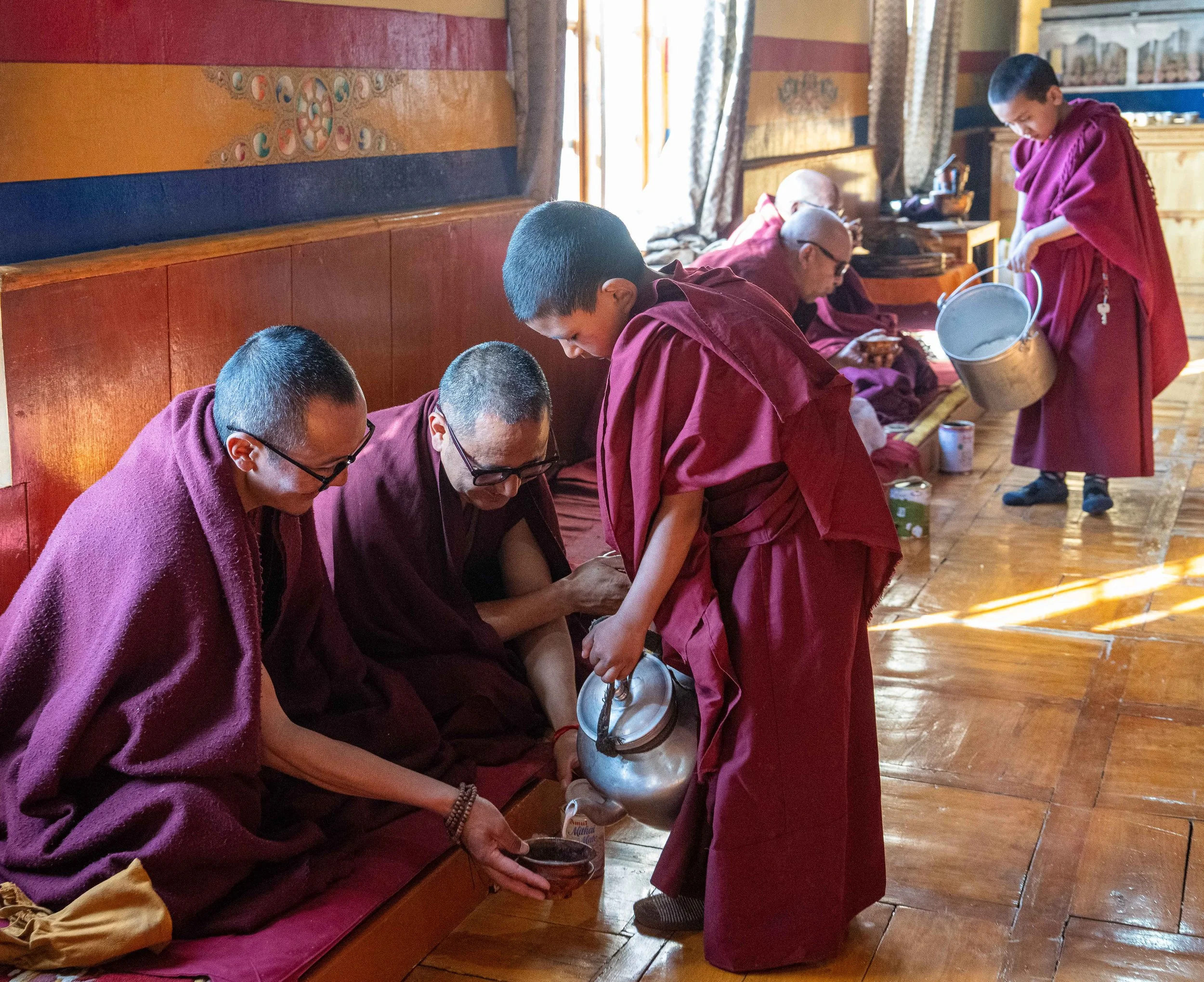
Buddhist monks enjoy morning tea at the Thisky Monastery in India